

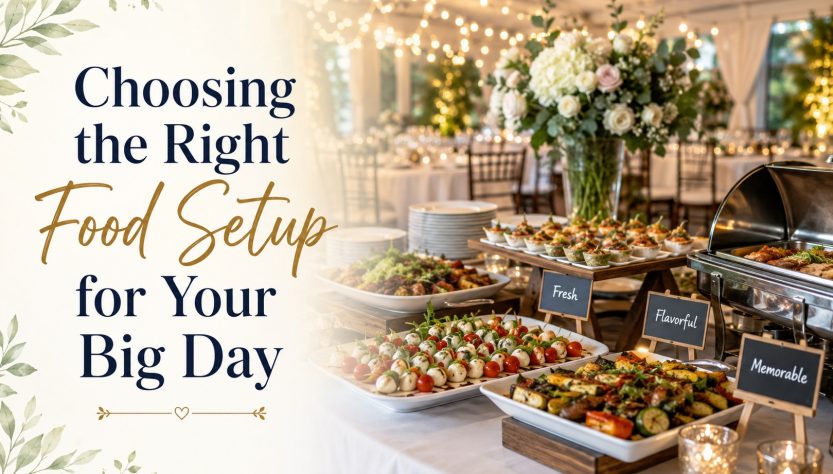
Wedding food has to do more than fill plates. It sets the pace of the day, gives guests something to talk about, and often serves as a bridge between formal moments and the more relaxed part of the celebration. The best menus feel personal without slowing everything down.
Couples often start with dishes they like, but the smarter starting point is the schedule. When are guests arriving? How long is the ceremony? Will the photos delay the meal? Are there older guests, children or people travelling far? Food planning becomes easier once the day is mapped properly.
Think in Moments, Not Courses
A wedding meal is a sequence. Drinks after the ceremony, light bites while photos happen, the main meal, dessert, evening snacks and late drinks all need to connect. If one stage is too heavy or too slow, the rest of the day can drag.
The aim is balance. Guests should not be hungry during speeches, sleepy after the main meal or left with nothing later in the evening. A simple timeline helps:
The phrase catering matrimono may look like a small search term, but the real decision behind it is much bigger: choosing food that suits the couple, the venue and the rhythm of the day. The right supplier should help with that structure, not just send a menu.
Match the Meal to the Venue
A country house, city venue, beach location and garden marquee all create different food challenges. Kitchens may be small, access may be limited, and some venues have strict rules on outside suppliers. Before falling in love with a menu, check whether the venue can support it.
Ask these questions early:
- Is there a working kitchen?
- Can caterers bring their own equipment?
- Where will food be prepared and plated?
- Is there enough space for a buffet or stations?
- Are open flames allowed?
- What time must suppliers leave?
These answers can save you from paying for a style of food that the venue cannot handle properly.
Make the Menu Personal, But Keep It Practical
Personal touches work well when they are easy for guests to understand. A pasta course inspired by a trip to Italy, a dessert from the couple’s childhood, or a late-night snack linked to where they met can all add meaning. What you want to avoid is a menu that needs a long explanation before anyone knows what they are eating.
Guest comfort still matters. Include familiar options, clear dietary labels and enough variety for different ages. If you want a bold dish, pair it with simpler sides. If you want a formal main course, keep the starter or dessert lighter.
Buffet, Family Style or Plated?
Plated meals are controlled and formal. Buffets are more relaxed but need space and fast replenishment. Family-style dining creates warmth because guests share food at the table, but it can become messy if tables are crowded.
There is no single best format. The right choice depends on the venue, budget, guest list and atmosphere you want.
Quick comparison:
- Plated meal: Best for formal timing, speeches and controlled portions.
- Buffet: Best for choice and relaxed movement.
- Food stations: Best for larger groups and varied tastes.
- Family style: Best for a warm, shared table experience.
- Grazing table: Best for arrivals, drinks receptions and informal venues.
Do Not Underestimate Evening Food
Evening food is often treated as an extra, but it can save the party. After drinks, dancing and hours since the main meal, guests need something easy. It does not have to be elaborate. Small sandwiches, pizza slices, grilled skewers, arancini, mini burgers or warm pastries can all work.
The key is timing. Serve too early, and it gets ignored. Serve too late, and people leave hungry. Aim for the point where the dance floor has been active for a while, and guests are ready for a second bite.
Final Checks Before You Book
Get everything in writing. That includes guest numbers, menu choices, staff numbers, arrival time, service time, equipment, cleanup, corkage, dietary handling and payment schedule. Weddings involve enough moving parts without vague supplier details.
The food should support the day rather than take it over. Choose a setup that fits the venue, keeps guests comfortable and reflects the couple without complicating service. When the meal flows well, everyone notices, even if they cannot explain why.
